Material Traceability & Responsible Sourcing
Our procurement philosophy prioritizes full material traceability and responsible reuse. Every batch of reclaimed timber or repurposed metal that enters our production pipeline is logged, photographed and assigned a material identity record. These records track origin, previous use, treatment history and structural properties so designers and procurement officers can make confident, code-compliant choices. When clients require documentation for green building credits or sustainability reporting, we provide the data packages that verify chain-of-custody and reuse percentages. Beyond compliance, this transparency allows us to select materials for functional longevity: dense, well-seasoned planks for structural surfaces; stable veneers for cabinetry; and finished textiles assessed for wear-resistance. Our approach reduces the demand for virgin resources and demonstrates how reclaimed supply can be professionalized for commercial and hospitality projects without compromising on performance or aesthetics.
Design-Led Upcycling & Customization
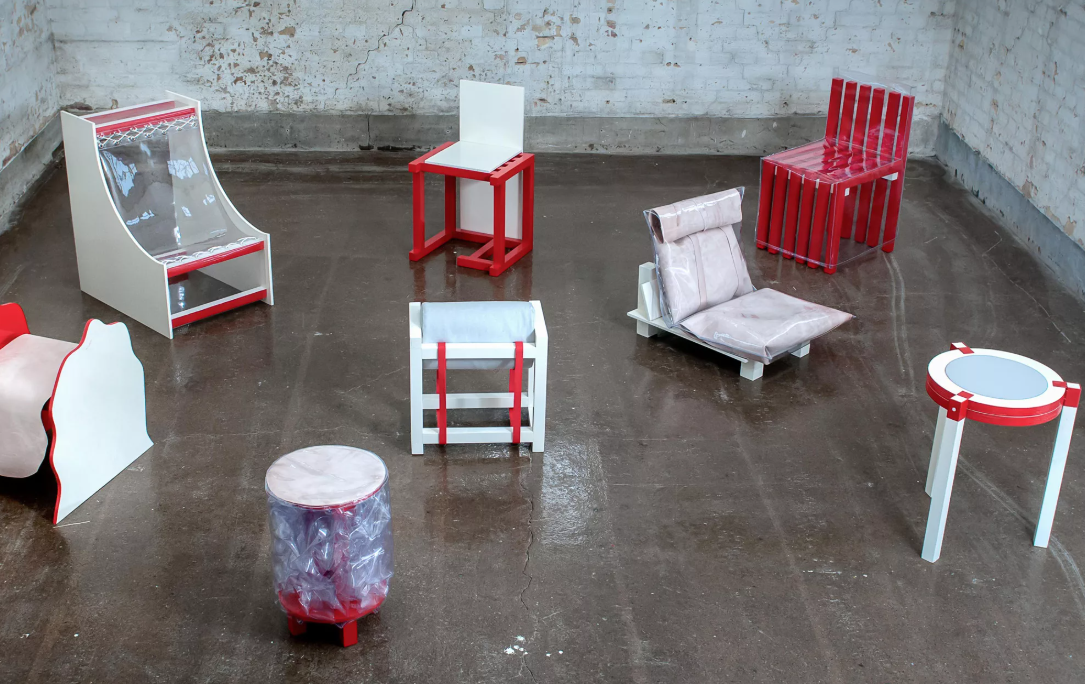
We blend creative furniture design with pragmatic manufacturing to unlock the aesthetic potential of reused elements. Our in-house designers interpret the unique qualities of each salvaged component—knots, patina, bolt holes—and recompose them into coherent product systems. Clients can commission custom dimensions, finishes and joinery details or select from curated upcycled collections that balance material-driven character with production efficiency. Because every project begins with an honest assessment of available stock, we propose designs that celebrate irregularities rather than force them into unsuitable molds. The result is furniture that has narrative depth—tables with layered planks showing age, benches with repurposed structural steel legs, and upholstered items using reclaimed textile panels. For commercial partners, we develop scalable variants that retain the original craft while enabling batch consistency.
Durability, Repairability & Lifecycle Support
A central tenet is that sustainable furniture must be long-lived and repairable. We build with mechanical joinery, replaceable components and clear repair strategies so that each piece can be maintained rather than thrown away. Our warranty program includes repair guidance and a network service option where we handle on-site or workshop repairs. For hospitality clients, we provide spare-part kits—leg replacements, hinge sets, and finish touch-up materials—that extend in-field service life. We also advise on material pairings and finish regimes to reduce wear in high-use environments, choosing robust coatings and abrasion-resistant fabrics. By designing for disassembly, we ensure that when a product reaches the end of its useful life, its valuable materials can be recovered and reincorporated into new products, closing the loop in a practical manner.
Local Production & Reduced Transport Footprint
Our production footprint emphasizes local processing to minimize transport emissions and to strengthen regional supply chains. Sourcing nearby reclamation projects and using neighborhood workshops reduces outbound freight and shortens lead times for clients across retail, interior design and hospitality. Local manufacturing also enables close collaboration on samples, quicker iterations during prototyping, and more efficient logistics for large installation jobs. Clients appreciate that localized runs reduce the carbon intensity of furniture deliveries and provide job opportunities for local craft communities. We partner with local carriers and offer consolidated shipping options to further optimize deliveries for multi-item orders or staged rollouts for hotel refits and retail rollouts.
Quality Assurance & Finish Excellence
High-quality finishing is what elevates reclaimed materials into market-ready products. Our quality assurance process includes dimensional checks, structural testing, moisture-stability verification and finish-bench approvals. Surface treatments are selected to enhance durability and to respect the original character of the material—matt sealing to protect patina, hard-wax oils for tactile warmth, or industrial lacquers where heavy wear is expected. Upholstered items undergo abrasion and stain testing with choices of recycled or low-impact fabrics to meet hospitality standards. For every production run we maintain an approval sample that serves as a benchmark and ensures color, assembly and tactile quality remain consistent. This attention to detail makes reclaimed furniture suitable for premium retail and intensive commercial environments.
Partnerships, Education & Community Impact
We cultivate partnerships with designers, social enterprises and training programs to amplify circular-economy impacts locally. Educational workshops teach repair skills, small-business reuse techniques and design-for-disassembly principles to community groups and apprentices. We also collaborate with architects and procurement teams to pilot reuse strategies in larger fit-outs, documenting outcomes and sharing methodologies. Profits from selected product lines support community repair cafes and material-collection events, creating a closed-loop ecosystem where waste becomes an accessible resource. By embedding these activities into our operating model, we aim to scale the social and environmental benefits of reclaimed production beyond individual commissions.